BMI Calculator
Calculate your Body Mass Index (BMI) and check if you are within the ideal weight range recommended by experts.
Enter your data
BMI Classification Table
| BMI (kg/m²) | Classification |
|---|---|
| Less than 17 | Severely Underweight |
| Between 17 and 18.4 | Underweight |
| Between 18.5 and 24.9 | Normal Weight (Ideal) |
| Between 25.0 and 29.9 | Overweight |
| Between 30.0 and 39.9 | Obesity Class II |
| Greater than 40 | Obesity Class III |
How does this tool work?
-
Enter weight: Provide your weight in kilograms (kg) or pounds (lb).
-
Enter height: Provide your height in centimeters (cm) or feet/inches.
-
Click Calculate: Press the button to compute your BMI.
-
Interpret result: See which category (Underweight, Normal, Overweight, Obese) your BMI falls into.
-
Consider limitations: BMI does not account for muscle mass; athletes may have high BMI but low body fat.
How is BMI calculated?
A simple way to find out if a person is within their ideal weight is BMI (Body Mass Index). The calculation consists of dividing weight (in kg) by height (in meters) squared:
Weight ÷ (Height × Height)
This calculation was created by mathematician Lambert Adolphe Jacques Quétele and is accepted worldwide by the WHO. Remember that BMI is a general indicator; for accurate assessments of muscle mass and fat, consult a healthcare professional.
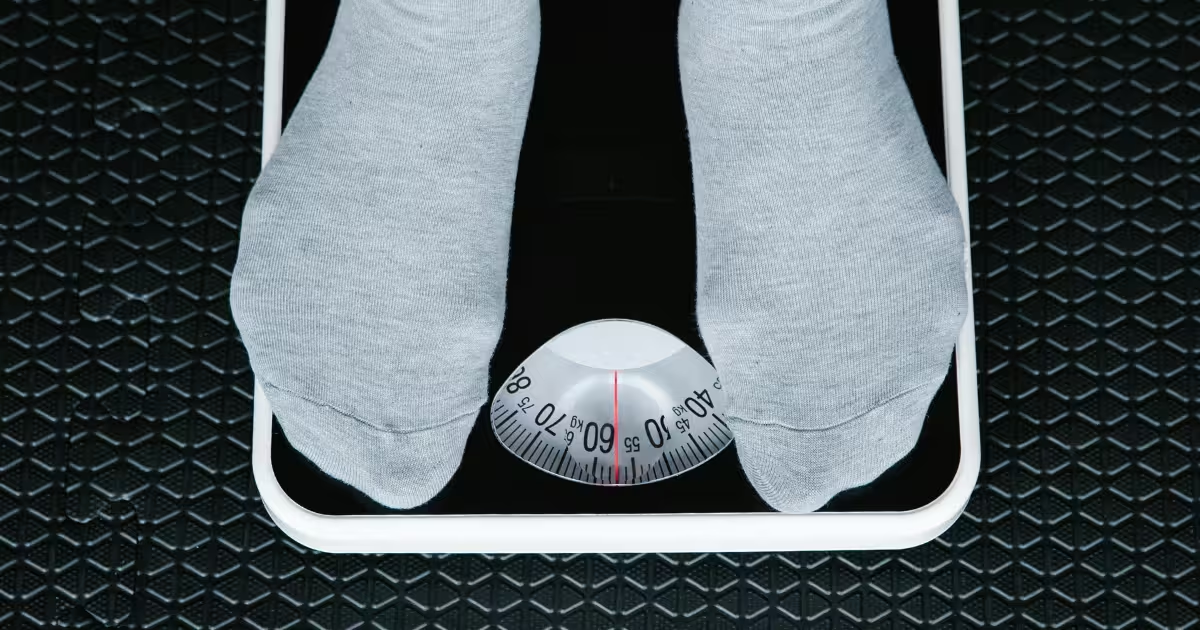
Understanding Your BMI
A simple way to find out if a person is within their ideal weight is BMI. Just divide weight by height squared: Weight ÷ (Height × Height). This calculation is accepted worldwide as a quick screening tool for health.
A BMI considered normal or ideal by the World Health Organization (WHO) is in the range between 18.5 and 24.9 kg/m². Below this is considered underweight, and above is considered overweight.
BMI is a general indicator. For athletes with high muscle mass, the index may result in "overweight" even with very low body fat, as muscle weighs more than fat. In these cases, tests like bioimpedance or skinfold calipers are more accurate.
- Underweight: Below 18.5
- Normal weight: 18.5 – 24.9
- Overweight: 25.0 – 29.9
- Obesity Class I: 30.0 – 34.9
- Obesity Class II: 35.0 – 39.9
- Obesity Class III: 40.0 or above
No. For children and teenagers, BMI is calculated the same way but interpreted using age and sex-specific percentiles. For seniors (over 65), the ideal BMI range is often slightly higher (e.g., 22 to 27) to provide a nutritional reserve.
A BMI outside the "normal" range is associated with higher risks of health conditions, such as type 2 diabetes, hypertension, and cardiovascular diseases. It serves as a first step for a conversation with your doctor.
BMI does not distinguish between fat and muscle, nor does it account for where fat is distributed (abdominal fat is generally riskier). It also doesn't consider bone density or ethnic differences in body composition.
Rate this Tool
Based on 12 user ratings.